

Motorized vs. Fixed Patio Covers: A Cost-Benefit Analysis
When evaluating high-end outdoor living structures, the decision often defaults to aesthetics. However, for the San Diego homeowner, the choice between a motorized system and a fixed patio cover is fundamentally a debate between climate control and shelter.
While a fixed roof offers permanent protection, a motorized system offers dynamic adaptation. This distinction creates what we at Soltech call the “Utility Gap.”
The Utility Gap is the discrepancy between the cost of an outdoor structure and the number of hours it can be comfortably used throughout the year.
A motorized system commands a 40% to 60% cost premium over fixed counterparts. The critical question for the homeowner is whether that premium translates to a proportional increase in usage hours, or if a static structure provides sufficient ROI for your specific microclimate.

The Core Difference: Shelter vs. Climate Control
To make an informed investment, we must first strip away the marketing language and define the physics of these systems.
Defining the Technologies
Fixed Patio Covers
A Fixed Patio Cover is a static structure, typically constructed from rigid, insulated patio roof panels (often aluminum or steel), designed to provide permanent, non-adjustable shade and total protection from precipitation.
These systems are engineered for solidity. They create a permanent shadow and a waterproof barrier that does not change regardless of the weather conditions outside.
Motorized Louvered Covers
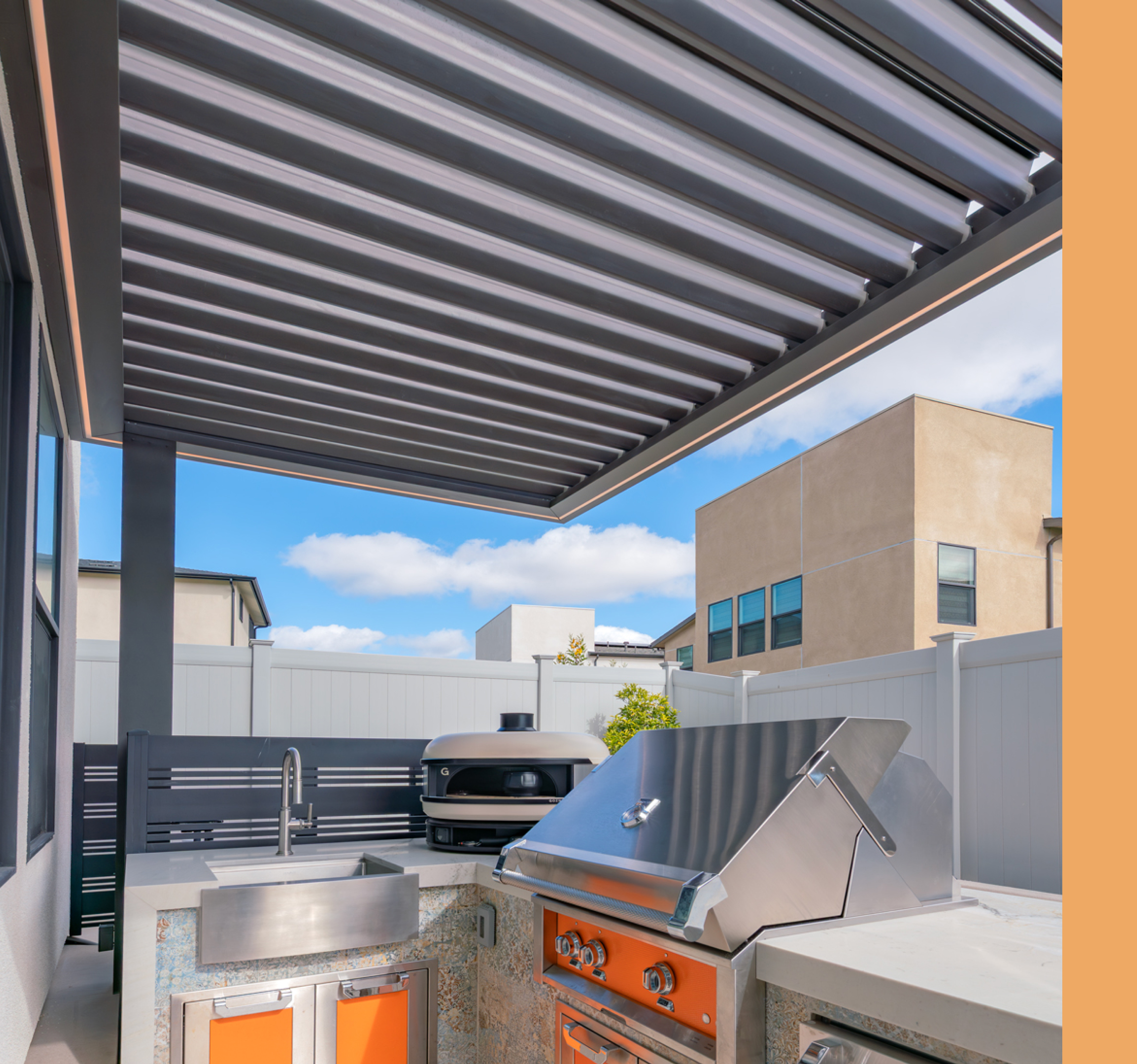
A Motorized Louvered Cover (or motorized pergola) is a dynamic roofing system composed of adjustable blades that rotate up to 180 degrees, allowing the user to control sunlight, airflow, and rain protection via remote or sensor automation.
The Verdict on Function
The core difference lies in flexibility. Fixed covers provide shelter; they are binary systems that are either “on” (providing shade/rain protection) or effectively non-existent (if you step outside them).
Motorized covers provide climate control; they allow you to manipulate the environment beneath the structure to lower temperatures or increase natural light.
Cost Analysis: What is cheaper, a fixed roof or a louvered roof?
A fixed patio roof is consistently cheaper than a motorized system, typically costing 30% to 50% less upfront.
For homeowners strictly analyzing the initial price tag, the fixed patio roof vs louvered roof comparison always favors the fixed option. This price delta is driven by the complexity of the materials and the engineering required for motion.
Understanding the Price Difference
The premium associated with motorized vs. fixed patio cover cost is not arbitrary; it is a reflection of the hardware required to facilitate movement.
- Engineering & Components: A fixed cover relies on static structural integrity. A motorized system requires extruded aluminum louvers, internal gutters, high-torque motors, and remote receivers.
- Smart Integration: Modern motorized systems often include rain sensors (to close automatically) and wind sensors (to open automatically to prevent uplift), adding to the material cost.
- Installation Complexity: Installing a fixed system is a structural carpentry task. Installing a motorized system is a hybrid of structural engineering and electrical integration.
At Soltech, we utilize high-grade aluminum and premium powder coating for both system types. While the fixed option is less expensive, it does not sacrifice material quality; it simply requires fewer moving parts.
Performance Breakdown: Ventilation and Solar Gain
The true value of an outdoor structure is determined by how it handles the extremes: the peak heat of August and the gloom of “May Gray.” This is where the performance gap widens.
Ventilation Capabilities: The Trapped Heat Index
One of the most significant drawbacks of a fixed roof is the Trapped Heat Index.
Trapped Heat Index: The phenomenon where hot air rises and accumulates beneath a non-vented solid roof, creating a pocket of air that is consistently 10–15 degrees hotter than the ambient temperature outside.
In inland San Diego areas like Poway or Escondido, where ambient temperatures reach 95°F, the temperature under a fixed, non-insulated roof can exceed 105°F. Ceiling fans can circulate this air, but they cannot remove it.
Motorized Solution: By cracking the louvers of a motorized system just 10 degrees, you create an updraft. The hot air escapes through the roof, pulling cooler air in from the sides. This passive ventilation can lower the temperature beneath the pergola by 15 to 20 degrees compared to a solid roof.
Solar Gain and Light Control
The second critical factor is light management, specifically regarding the interior of your home.
- The Fixed Cover Problem: A solid roof blocks 100% of overhead light permanently. If your patio cover is attached to your living room wall, that adjacent room will be significantly darker year-round. In winter, when the sun angle is low, you lose the benefit of passive solar heating, potentially increasing your utility bills.
- The Motorized Solution: Adjustable roof benefits include the ability to angle louvers to direct winter sunlight into your home while blocking harmful UV rays. This preserves the natural light in your interiors and maximizes solar gain during cooler months.
Comparison Matrix: Cost, Durability, and Flexibility
To visualize the trade-offs, we have compiled a direct comparison of the two systems based on performance metrics.
| Feature | Fixed Patio Cover (Insulated Panels) | Motorized Louvered Cover |
| Initial Cost | $ (Low) | $$$ (High) |
| Heat Release | Low (Prone to Trapped Heat) | High (Active Ventilation) |
| Rain Protection | 100% Waterproof | 98-100% (When Closed) |
| Light Control | Static (Always Shaded) | Dynamic (0% to 90% Light) |
| Maintenance | Low | Medium (Motor/Gutter cleaning) |
| Interior Impact | Darkens adjacent rooms | Preserves interior light |
| Durability | High (No moving parts) | High (Engineered aluminum) |
ROI and Resale Value: Is a motorized pergola worth the money?
When clients ask, “Is a motorized pergola worth the money?” the answer depends on how you calculate value. If value is defined strictly by the lowest upfront cost, the fixed cover wins. However, if value is defined by Cost Per Usable Hour, the motorized system often yields a higher Return on Investment (ROI).
Calculated Usage ROI
Homeowners report a 40% increase in usable patio hours with motorized systems compared to fixed covers.
Consider the “Shoulder Seasons” and specific daily times:
- Early Morning: A fixed cover blocks the warming sun. A motorized cover lets it in.
- Mid-Day Summer: Both provide shade, but the motorized cover vents the heat.
- Overcast Days: A fixed cover makes the patio feel cavernous and dark. A motorized cover opens to the sky to maximize brightness.
Patio cover investment value is also reflected in resale value. In the luxury San Diego market, a motorized louvered roof is viewed as a premium architectural feature—akin to a pool or outdoor kitchen—whereas a fixed aluminum awning is often viewed merely as a functional add-on.
The Soltech Verdict: Choosing for Your Microclimate
San Diego is not a single climate; it is a collection of microclimates. The “right” choice depends heavily on where your home sits relative to the coast.
Choose a Fixed Patio Cover If:
- Budget is the Priority: You need shade and rain protection at the most efficient price point.
- North-Facing Orientation: Your patio receives limited direct sunlight, so heat buildup is less of a concern.
- Maximum Rain Protection: You require a space that is 100% watertight 100% of the time for sensitive electronics or furniture.
Choose a Motorized Louvered System If:
- Inland Heat: You live in El Cajon, Poway, or Scripps Ranch where venting trapped heat is essential for summer use.
- Coastal Gray: You live in La Jolla or Del Mar and want to open the roof to maximize light during overcast mornings.
- Interior Light Matters: You want to protect your patio without turning your living room into a cave.
- Lifestyle Integration: You view your outdoor space as a primary living area and require total control over the environment.
Closing the Utility Gap
At Soltech, we believe that the most expensive patio cover is the one you never use because it is too hot, too cold, or too dark. While the motorized system requires a higher initial investment, it effectively closes the utility gap, ensuring your outdoor living room is open for business year-round.
Unsure how the sun angles affect your specific property? with Soltech today. We will analyze your home’s orientation and help you decide which system offers the best ROI for your lifestyle.
Testimonials
Considering getting a patio cover for your home or business? See what Soltech customers have to say!


Why San Diego Homeowners & Businesses Choose Soltech
Since Soltech has installed patio cover systems for over 20 years, our systems are expertly designed and flawlessly executed.

High-Quality Brands & Materials
Soltech uses only the finest materials for our patio covers, such as aluminum and Elitewood™. Aluminum is highly durable and lightweight, while Elitewood™ offers the benefits of aluminum coupled with a wood-like finish. Other extras include automated louvers, integrated lighting, and more.
Innovation & Versatility
Soltech studies the market for new product releases, design innovations, and installation techniques to ensure our team is trained to use them before anyone else. From smarter structural components like extruded aluminum to next-generation louver systems, we combine timeless craftsmanship with future-forward solutions that raise the bar for outdoor living.
Industry Savvy
While many companies rely on contract workers, Soltech has a dedicated full-time crew. Since our team works with patio covers and pergolas daily, we have extensive knowledge of these systems. For example, Soltech has a dedicated electrical expert on staff exclusively for wiring patio covers.
Installation Expertise
Soltech designed our own proprietary methods for installing patio covers and pergolas. We have a project manager assigned to each job that ensures smooth communication between all parties. In turn, no details get missed on the job site, and our customers leave 100% satisfied.
Soltech Patio Cover Portfolio
Discover the many ways that a Soltech patio cover can transform your outdoor living space. See why Soltech is a favorite of residential and commercial clients in San Diego.


More Ways to Cover Your Space

Cantilever Patio Covers
A cantilever pergola is supported from a single side, delivering a clean, architectural profile and leaving the area underneath free from posts or obstructions.

Solid Patio Covers
Solid patio covers provide complete protection from the elements, making them ideal for year-round outdoor use in the San Diego area.

Lattice Patio Covers
Lattice patio covers use an open-slat pattern that provides partial shade that lets in sunlight and fresh air. They bring an elegant touch to outdoor spaces.

Where Does Soltech Operate?
Soltech serves residential and commercial customers throughout the greater San Diego area. North to Oceanside and south to Chula Vista and beyond, we have you covered!
Resources on Patio Covers & Pergolas
Explore our expert resources on patio covers and pergolas, designed to help you make informed decisions for your outdoor space. From design ideas and material guides to maintenance tips, we provide everything you need to create a stylish, functional outdoor retreat.
Benefits of Aluminum Covers
Discover the advantages of aluminum patio covers, from unmatched durability to modern style. See why aluminum is a smart choice for long-lasting, hassle-free outdoor living.
FAQs
Find answers to common questions about Soltech and our patio covers. Browse our FAQs to learn more about our design and installation processes, as well as basic maintenance and upkeep.



Finance the Upgrade
You Actually Want
We believe homeowners shouldn’t have to choose between doing a project right and doing it now.
That’s why we’ve partnered with Hearth—so you can move your project forward, without unnecessary financial strain or compromises.
Pre-qualification takes just a few minutes and won’t affect your credit score. Plus, there’s no obligation to move forward unless you find an option that works for you.
