

High-End Patio Amenities: Integrated Heating and Lighting
Integrated patio lighting and heating is not an upgrade added to a finished structure — it is a set of decisions made before the first beam is fabricated. At Soltech Patio Covers, we design the full amenity stack — lighting layers, heat zones, control circuits, and conduit routing — as part of the structural drawing package, before any aluminum extrusion is cut or ordered. For San Diego homeowners in La Jolla, Coronado, Encinitas, Rancho Santa Fe, Carmel Valley, and Del Mar who are building or retrofitting a patio cover, the difference between a finished outdoor room and a covered patio with bolted-on fixtures is made entirely in the planning phase.

The Difference Between a Covered Patio and an Outdoor Room
An outdoor room is a covered structure with pre-planned, concealed electrical infrastructure for lighting, heating, and controls — and the distinction from a covered patio is made entirely during the planning phase, before installation begins.
A covered patio is a construction product: posts, beams, a roof system, and whatever fixtures get added afterward. An outdoor room is a designed space where the electrical infrastructure is part of the structure itself. The mechanism that makes this possible in our aluminum systems is conduit concealment — routing all electrical conduit through the hollow cores of aluminum structural extrusions rather than surface-mounting it to post or beam exteriors.
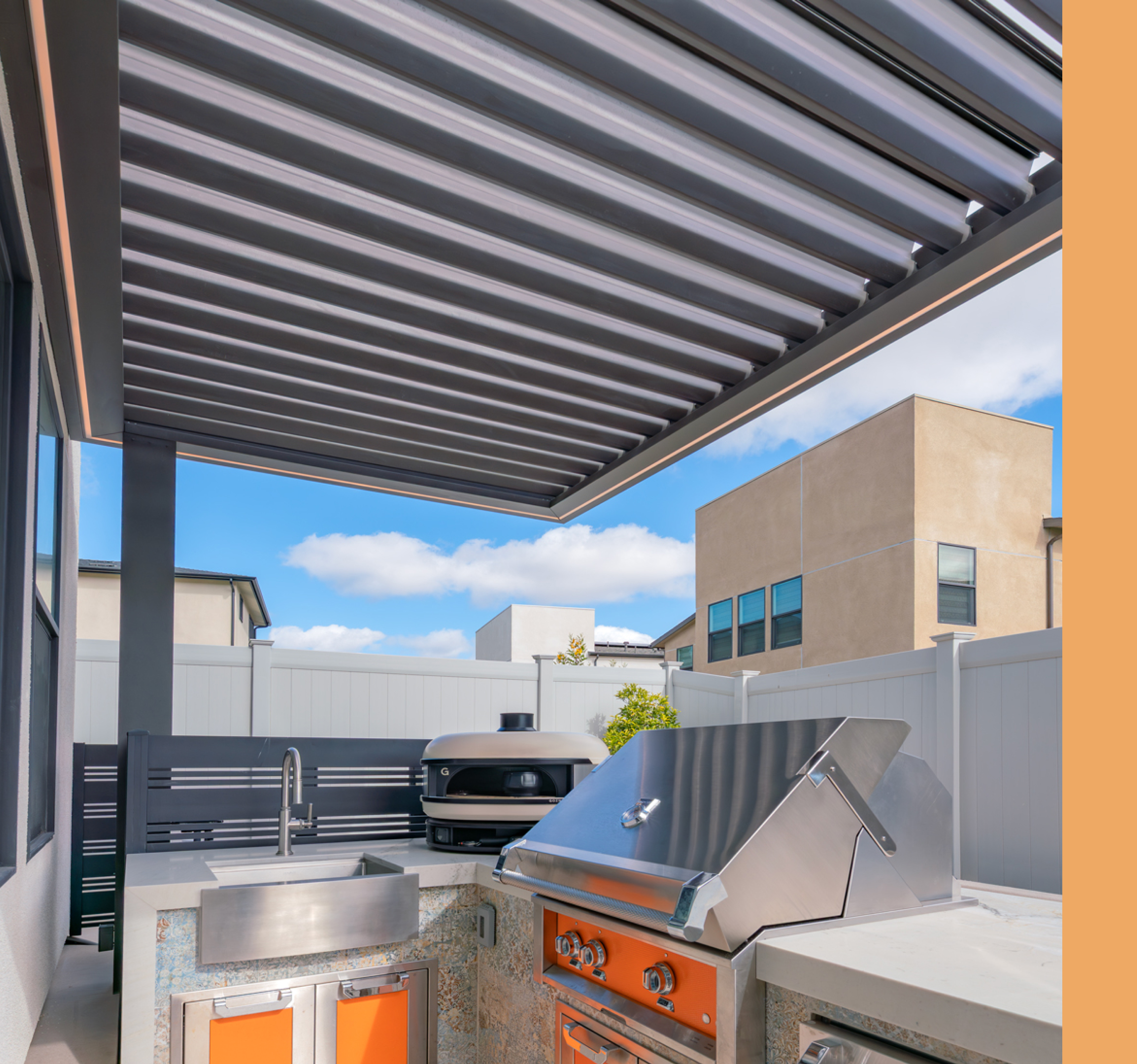
A high-end outdoor room also differs in what it includes. Soltech’s amenity planning typically accounts for the full lifestyle-use stack — not just lighting and heating, but the infrastructure required to make the patio function like an interior room. The most common integrated amenities include ceiling fans, recessed speakers, outdoor-rated TV wiring, appliance circuits for built-in BBQ or beverage centers, dedicated outlet placement for countertop appliances, and weatherproof USB/low-voltage charging points. These amenities are simple to include when planned during structural design — and expensive to retrofit once the structure is installed.
The cost consequence of skipping this step is significant. Homeowners who retrofit lighting and heating into an existing patio cover without pre-planned conduit routing face electrical costs that run 35–50% higher than the same scope completed during initial construction — because every conduit run becomes a surface-mount or trench job. Working with luxury patio cover installers who plan the electrical infrastructure before fabrication is the only way to avoid this outcome.
The Electrical Rough-In Checklist for Integrated Patio Covers
The electrical rough-in for an integrated patio cover must be fully specified before structural fabrication begins — because once hollow aluminum extrusions are cut, welded, and installed, internal conduit routing becomes a retrofit problem with a 35–50% cost premium over new-build integration.
This is the patio electrical planning checklist our team executes during the design phase for every San Diego outdoor room:
- Confirm hollow extrusion conduit routing path for all lighting and heating circuits before fabrication drawings are finalized.
- Specify a dedicated 240V circuit for each heating zone (units rated ≥1,500W require individual circuits).
- Specify dedicated 120V circuits for each lighting layer — Task, Ambient, and Accent on separate circuits for dimmer compatibility.
- Locate the Smart Relay panel position and include it in permit drawings before post installation begins.
- Calculate Voltage Drop for all circuit runs exceeding 50 feet from the panel.
- Confirm permit scope with the San Diego Development Services Department covers all permanently installed electrical work.
- Mark all conduit entry and exit points on structural drawings before any extrusion is ordered.
The Amenity Stack Most Homeowners Forget to Plan For
The most common failure point in patio electrical planning is that homeowners plan only for “lights and heaters,” then discover mid-project that modern outdoor rooms require far more infrastructure than a single switch leg. The amenity stack most often missed during rough-in includes:
- Ceiling fan wiring and independent fan-speed control
- Outdoor-rated speaker pre-wire and low-voltage conduit paths
- TV mounting blocking and concealed power/data routing
- Dedicated countertop outlets for hosting and serving zones
- Appliance-ready circuits for grills, refrigerators, ice makers, or pizza ovens
- Step and pathway lighting circuits for adjacent hardscape
- Future-proof conduit runs for motorized screens or motorized louvers
These features do not require additional demolition if they are roughed-in before fabrication — but they often require visible conduit, surface raceways, or trenching when added later.
Heater Placement Strategy: Comfort Depends on Layout, Not Wattage Alone
Integrated heating works only when heater placement matches seating geometry. A single high-wattage unit centered in the roof often produces uneven comfort — warm air above the table and cold zones at the perimeter. Soltech’s layout strategy positions heaters to overlap coverage at the seating plane, typically aligning one heater per bay and orienting radiant throw directly toward table zones rather than walkways. This design approach reduces total wattage required while increasing perceived comfort, especially when paired with screen deployment for Thermal Retention.
Soltech’s amenity integration protocol is a pre-fabrication planning sequence that specifies all electrical conduit routing paths, circuit counts, wire gauges, and smart relay panel locations through the hollow cores of aluminum structural extrusions — before any component is fabricated or ordered. The four steps: (1) amenity mapping — all lighting layers, heat zones, and control points plotted on the structural drawing; (2) conduit routing — every run path confirmed through hollow extrusion cavities; (3) circuit specification — dedicated circuits assigned per zone with wire gauges calculated for Voltage Drop compliance; (4) relay panel placement — smart relay enclosure location confirmed in permit drawings.
Smart Relays and Controls: Running Your Outdoor Room From One Interface
Smart relays are low-voltage switching modules installed during the electrical rough-in phase that allow every lighting and heating circuit in a patio cover to be grouped into scenes and controlled from a single app — without running separate control wire to each individual fixture.
Relay panels are installed inside the structure’s electrical enclosure during rough-in. Compatible platforms our team deploys include Lutron, Leviton Decora Smart, and standard Z-Wave/Zigbee ecosystems. Zone grouping eliminates the friction of managing eight independently switched circuits: a single “Evening Dining” scene activates task lighting at 80%, dims ambient to 40%, and triggers two heat zones — one tap, one outcome.
Lighting Layer Strategy: Task, Ambient, and Accent Are Different Circuits for a Reason
High-end patio lighting is not a single “on/off” circuit. Soltech separates lighting into three functional layers because each layer serves a different use case and requires independent dimming control: Task lighting for cooking and dining visibility, Ambient lighting for overall glow and circulation, and Accent lighting to highlight columns, landscape edges, or architectural textures. When all lighting is placed on one circuit, homeowners lose control — and the space becomes either overlit or underlit depending on the occasion. Circuit separation is the mechanism that makes a patio feel like an interior room rather than a floodlit exterior.
For homeowners who also have a motorized louvered pergola, smart relays enable unified control of roof louver position, heating zones, and lighting layers from the same interface — turning the entire outdoor room into a single programmable environment.
Permitting Reality: Integrated Amenities Must Be Designed for Inspection
Any permanently installed lighting, heating, or control system tied into the home’s electrical panel must be included in the permit scope. In San Diego, electrical rough-in planning is not just a convenience — it is what allows the final build to pass inspection without costly revisions. Soltech includes circuit counts, relay panel placement, and conduit routing paths in the structural drawing package so the system is engineered as a permitted installation rather than treated as a post-build add-on.
What a Fully Integrated Soltech Outdoor Room Typically Includes
A completed Soltech outdoor room is defined by concealed infrastructure — not exposed conduit or afterthought fixtures. Most integrated builds include recessed downlighting, dimmable ambient lighting, accent lighting zones, one or more dedicated heater circuits per bay, smart relay scene control, and pre-planned conduit paths for future upgrades like motorized screens or motorized louvers. The result is a patio cover that functions as a permanent extension of the home — with clean lines, inspection-ready wiring, and controls designed for daily use.
Plan It Once — Build It Into the Structure
Integrated patio lighting and heating only works when it’s engineered before fabrication. Soltech Patio Covers designs conduit concealment, circuit zoning, smart relay controls, and permit-ready electrical layouts as part of the structural drawing package — so your outdoor room looks finished, not retrofitted.
Contact our team to receive a full electrical rough-in plan built into your patio cover design from day one.
Testimonials
Considering getting a patio cover for your home or business? See what Soltech customers have to say!


Why San Diego Homeowners & Businesses Choose Soltech
Since Soltech has installed patio cover systems for over 20 years, our systems are expertly designed and flawlessly executed.

High-Quality Brands & Materials
Soltech uses only the finest materials for our patio covers, such as aluminum and Elitewood™. Aluminum is highly durable and lightweight, while Elitewood™ offers the benefits of aluminum coupled with a wood-like finish. Other extras include automated louvers, integrated lighting, and more.
Innovation & Versatility
Soltech studies the market for new product releases, design innovations, and installation techniques to ensure our team is trained to use them before anyone else. From smarter structural components like extruded aluminum to next-generation louver systems, we combine timeless craftsmanship with future-forward solutions that raise the bar for outdoor living.
Industry Savvy
While many companies rely on contract workers, Soltech has a dedicated full-time crew. Since our team works with patio covers and pergolas daily, we have extensive knowledge of these systems. For example, Soltech has a dedicated electrical expert on staff exclusively for wiring patio covers.
Installation Expertise
Soltech designed our own proprietary methods for installing patio covers and pergolas. We have a project manager assigned to each job that ensures smooth communication between all parties. In turn, no details get missed on the job site, and our customers leave 100% satisfied.
Soltech Patio Cover Portfolio
Discover the many ways that a Soltech patio cover can transform your outdoor living space. See why Soltech is a favorite of residential and commercial clients in San Diego.


More Ways to Cover Your Space

Cantilever Patio Covers
A cantilever pergola is supported from a single side, delivering a clean, architectural profile and leaving the area underneath free from posts or obstructions.

Solid Patio Covers
Solid patio covers provide complete protection from the elements, making them ideal for year-round outdoor use in the San Diego area.

Lattice Patio Covers
Lattice patio covers use an open-slat pattern that provides partial shade that lets in sunlight and fresh air. They bring an elegant touch to outdoor spaces.

Where Does Soltech Operate?
Soltech serves residential and commercial customers throughout the greater San Diego area. North to Oceanside and south to Chula Vista and beyond, we have you covered!
Resources on Patio Covers & Pergolas
Explore our expert resources on patio covers and pergolas, designed to help you make informed decisions for your outdoor space. From design ideas and material guides to maintenance tips, we provide everything you need to create a stylish, functional outdoor retreat.
Benefits of Aluminum Covers
Discover the advantages of aluminum patio covers, from unmatched durability to modern style. See why aluminum is a smart choice for long-lasting, hassle-free outdoor living.
FAQs
Find answers to common questions about Soltech and our patio covers. Browse our FAQs to learn more about our design and installation processes, as well as basic maintenance and upkeep.



Finance the Upgrade
You Actually Want
We believe homeowners shouldn’t have to choose between doing a project right and doing it now.
That’s why we’ve partnered with Hearth—so you can move your project forward, without unnecessary financial strain or compromises.
Pre-qualification takes just a few minutes and won’t affect your credit score. Plus, there’s no obligation to move forward unless you find an option that works for you.
