

Patio Shade for Hot Backyards in San Diego: How to Design for East County and Valley Heat
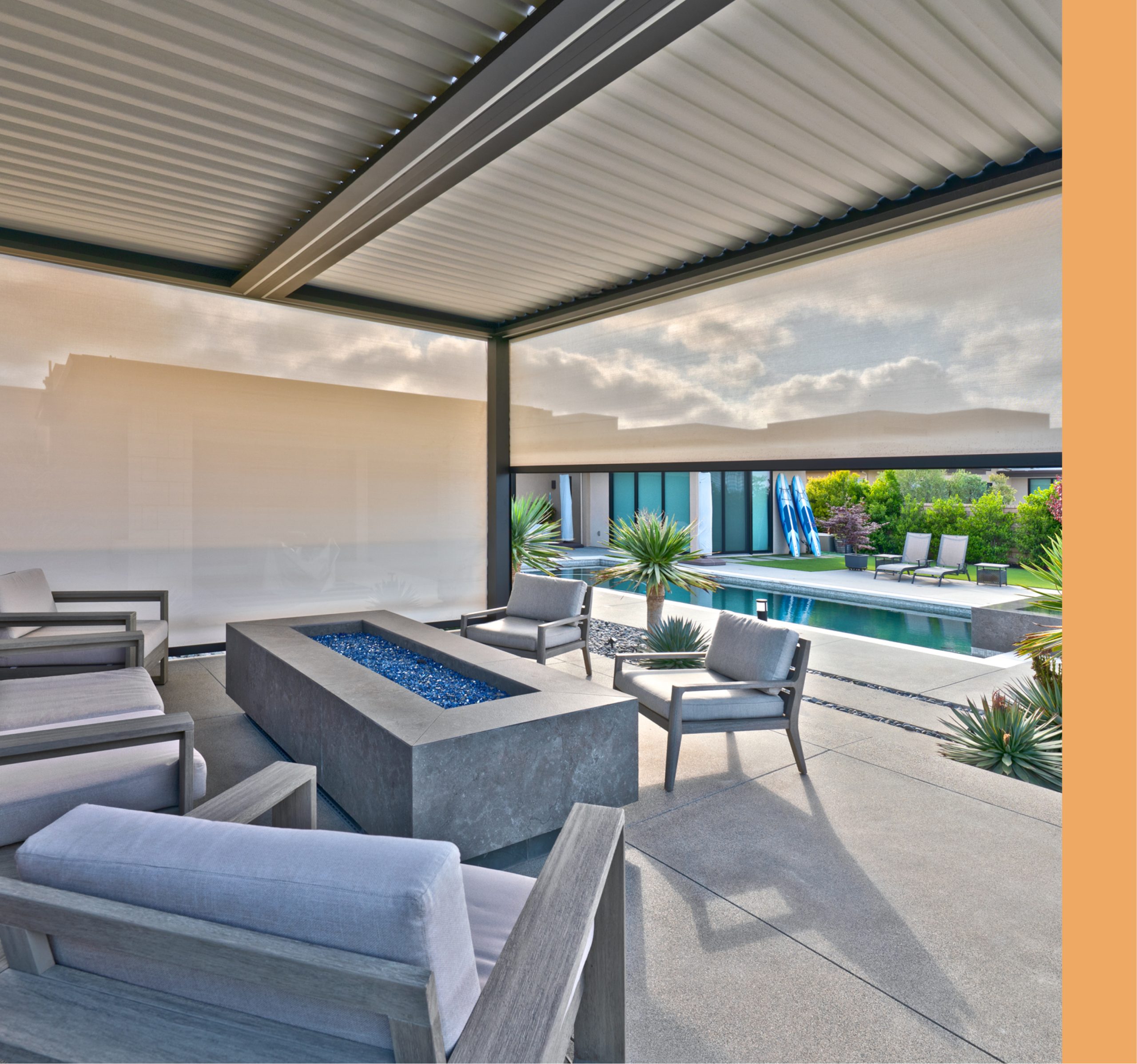
Patio shade for a hot backyard in San Diego’s inland valleys has to stop two separate heat sources: direct sun through the opening and radiant heat from the deck and walls. The gap between coast and valley is large. The National Weather Service in San Diego reported August 2022 average highs of 93.9 degrees at Ramona Airport and 92.4 degrees in Escondido. San Diego Airport averaged 79.5 degrees, in a month that ran 2 to 3.5 degrees above average.
A patio that should feel like the best room in the house at 5 p.m. instead becomes the one you walk past. Soltech Patio Covers has served San Diego since 2011, backed by more than 20 years of Aquasoltech sheet metal expertise. We design residential patio covers in San Diego around the heat source first and the roof second.
Why Is a West-Facing Patio Unusable in Late Afternoon in Inland San Diego?
A west-facing patio becomes unusable in late afternoon because the low western sun shines straight under the roof edge while the sun-heated deck and wall release stored heat toward you. Both effects peak between mid-afternoon and sunset, so a roof that only shades the middle of the day cannot fix them.
Solar azimuth is the compass direction of the sun, and solar altitude is its height above the horizon. At San Diego’s latitude of about 32.7 degrees north, the noon sun climbs to about 81 degrees on the summer solstice, calculated as 90 degrees minus the latitude plus the 23.4-degree solar declination. On the winter solstice, it reaches only about 34 degrees, according to the San Diego Reader. In summer, the sun also rises and sets north of due east and west, according to the Stanford Solar Center. A west or northwest patio therefore takes late-day sun at a low angle.
A hot patio usually comes down to two separate heat sources, and each needs its own fix. If your west-facing patio is too hot to use at 4 p.m., one or both of these sources is responsible:
- Direct beam gain: Sunlight passes through the open side and lands on people and furniture. The responses are roof coverage, louver rotation, and a screen on the low-sun side.
- Radiant heat: The deck, the adjacent wall, and an uninsulated roof absorb sun and re-emit heat toward you. Thermal mass, the ability of dense materials such as concrete and stucco to store heat, keeps those surfaces warm after the sun moves on. The responses are an insulated roof panel, shade on the deck and wall, and moving air.
City News Service reported that on September 21, 2021, highs reached 104 in Santee, 103 in Escondido, 102 in Poway, 101 in El Cajon, and 96 in Rancho Bernardo. San Diego International Airport reached 84.
At 110 degrees air temperature, Arizona home-improvement host Rosie Romero measured a west-facing wall at 150 degrees in full sun and 104 degrees under a patio shade. To find your source, follow these steps on a hot afternoon:
- Stand in the shade of the existing roof and note whether the heat eases.
- Hold a hand near the wall and the deck and note which feels hotter than the air.
- Return after sunset and note whether the patio stays warm.
Relief in the shade points to direct beam gain. Heat that persists in the shade or after sunset points to radiant heat.
How Do You Match a Roof System to Your Patio’s Direction in San Diego?
Match the roof system to the direction the patio’s open side faces: a solid or lattice roof for north, a solid or insulated roof with a deeper overhang for south, louvers plus a side screen for east, and an insulated roof plus a screen for west. The table lists the peak exposure window for each direction. Times shift with the season and with neighboring trees and walls.
| Open side faces | Peak exposure window | Recommended system |
|---|---|---|
| North | Limited direct sun, mainly low summer sun near sunrise and sunset | Solid or lattice roof sized to the seating zone, plus a ceiling fan |
| East | Sunrise until late morning | Louvered roof for overhead sun and airflow, plus a screen on the open side if the low morning beam reaches the seating zone |
| South | Midday, when the sun is highest | Solid or insulated roof with enough overhang depth to shade the seating zone |
| West | Mid-afternoon until sunset | Insulated roof, a screen on the open side, and shade on the west wall |
Follow these steps to read the table for your yard:
- Check which direction the patio’s open side faces with a compass or phone.
- Note the hours the sun reaches the seating zone on a clear July afternoon.
- Pick the matching row, then adjust for trees or walls that shade the yard.
Louver rotation is the tilt angle of adjustable roof slats, and it sets how much sun and air pass through. Louvers control overhead sun, while a low beam from the open side needs a vertical screen. For the mechanics behind the tilt, see how motorized louvered roofs work.
Does a Solid Roof or an Adjustable Louver Cool a Space More?
Neither roof wins every hour. A solid insulated roof gives constant full shade and slows heat moving through the roof panel, while an adjustable louver roof lets you trade shade for airflow as the day changes. Louvers vent rising hot air and can be tilted against the sun. A solid roof holds one setting all day, which is why it suits patios where afternoon heat is the main complaint.
How much cooler an insulated panel keeps the space underneath depends on the panel, the orientation, and the airflow, so no single number fits every yard. Supplier figures vary widely and none come from an independent test we know of, so treat any promised number as a claim, not a guarantee. What the foam core does is slow the transfer of heat through the roof, which means the underside radiates less heat down onto the seating area.
We build insulated and non-insulated solid patio covers with materials from brands including Elitewood and 4K Aluminum, and the insulated option uses panels designed to regulate temperature.
Our louvered patio covers use adjustable louvers, with optional rain and wind sensors that close them automatically. Choose with these steps:
- Pick a solid insulated roof when heat after 3 p.m. is the main complaint, such as on a west-facing patio in El Cajon or Santee.
- Pick louvers when you want winter sun, summer shade, and airflow from one roof.
- Pair either roof with a screen on the open side if the low sun still reaches the seating zone.
If you are still weighing open slats against a full roof, see our comparison of lattice vs solid patio covers, including which keeps you cooler on an inland afternoon.
Where Do Fans and Surface Shade Belong in a Covered Inland Patio?
A ceiling fan belongs in the middle of the covered space, hung at least 7 feet above the floor and 18 inches from any wall. Surface shade belongs on the hot deck and wall that the roof does not reach. ENERGY STAR gives those minimums for mounting a ceiling fan in the middle of the space. Follow these steps:
- Center one ceiling fan over each seating or dining zone.
- Hang the blades 8 to 9 feet above the floor where the cover allows, since ENERGY STAR lists that range as the best for airflow.
- Keep the blades at least 18 inches from walls.
- Choose a UL wet-rated fan where rain can reach it, because ENERGY STAR notes that patios and porches with direct water contact call for a wet rating.
- Extend shade to the west wall and the deck with a retractable screen or a deeper roof.
Surface shade matters because radiant heat does not stop when the roof does. In the same Arizona test at 110 degrees, a concrete tile floor measured 123 degrees in the sun and 96 degrees behind a pull-down shade screen. Shading the deck and wall reduces the thermal mass load, so less heat comes back after sunset.
Soltech adds ceiling fans, electric heaters, and retractable sun screens to its patio covers, and our dedicated full-time crew, including an in-house electrical expert, handles the wiring. For outdoor living in inland heat, the roof handles the beam, and the fan and surface shade handle the radiant heat.
Inland Patio Shade FAQs
Inland patio shade design prioritizes heat control from sun and hot surfaces, while coastal design prioritizes finishes and fasteners that resist salt air. An Escondido or Ramona lot faces the heat gap shown in the National Weather Service averages, and an oceanfront lot faces chloride exposure. Soltech designs for both, so the right system depends on where your yard sits.
An El Cajon patio cover does not need an insulated roof, but an insulated roof panel is the better choice when afternoon heat is the main complaint. Soltech also builds non-insulated solid roofs, which provide dependable shade and rain protection without a thermal barrier. El Cajon reached 101 degrees on September 21, 2021, according to City News Service.
Solar azimuth is the compass direction of the sun, and it tells you which side of the patio the sun enters at each hour. In summer, the sun rises and sets north of due east and west, according to the Stanford Solar Center. A patio that faces west or northwest therefore receives the latest direct sun of the day.
Louvered patio covers can close on their own when they include optional integrated rain and wind sensors. Soltech offers those sensors as an option on its louvered patio covers. For Poway patio shade, a homeowner can add them when the cover is designed, so the louvers close during inclement weather without anyone adjusting them. See how motorized and manual louvered systems compare.
Yes, a retractable sun screen on the western side blocks the low-angle beam that a horizontal roof cannot, and it cools the surfaces behind it. In an Arizona infrared test at 110 degrees, a concrete tile floor measured 96 degrees behind a pull-down shade screen versus 123 degrees without one. Soltech adds retractable sun screens to its patio covers.
Key Takeaways
- Two heat sources: Direct sun through the open side and radiant heat from the deck, wall, and roof each need their own fix.
- Orientation decides the roof: Solid or lattice for north, a deeper-overhang solid or insulated roof for south, louvers plus a side screen for east, and an insulated roof plus a screen for west.
- Insulated solid or louvers: Choose insulated solid when heat after 3 p.m. is the main complaint, and louvers for winter sun, summer shade, and airflow from one roof.
- Insulated panels: They slow heat moving through the roof, but no single temperature drop fits every yard.
- Fans and surface shade: Hang fans at least 7 feet up and 18 inches from walls, use a UL wet-rated fan where rain reaches it, and shade the deck and west wall.
Patio Shade for a Hot Backyard in San Diego: Next Steps
Patio shade for a hot backyard in San Diego works when each heat source gets its own fix. A roof and screen handle the beam, while insulated panels, surface shade, and a ceiling fan handle the radiant heat. Picture the same patio at 5 p.m. with the afternoon sun handled: dinner outside, the fan turning, the deck cool underfoot.
Soltech Patio Covers has served San Diego since 2011, backed by more than 20 years of Aquasoltech sheet metal expertise, with full-time employee crews and no subcontractors on any job site. Licensed sheet metal contractor, C-43-830212.
We handle city and HOA permit requirements, and our guide to the patio cover design and permitting process shows what to expect.
Schedule a Free, At-Home Design Consultation, tell us which direction your patio faces and when it becomes unusable, and we will match the system to the heat source.
From the coast to the East County valleys, see the full list of areas we serve.
Testimonials
Considering getting a patio cover for your home or business? See what Soltech customers have to say!


Why San Diego Homeowners & Businesses Choose Soltech
Since Soltech has installed patio cover systems for over 20 years, our systems are expertly designed and flawlessly executed.

High-Quality Brands & Materials
Soltech uses only the finest materials for our patio covers, such as aluminum and Elitewood™. Aluminum is highly durable and lightweight, while Elitewood™ offers the benefits of aluminum coupled with a wood-like finish. Other extras include automated louvers, integrated lighting, and more.
Innovation & Versatility
Soltech studies the market for new product releases, design innovations, and installation techniques to ensure our team is trained to use them before anyone else. From smarter structural components like extruded aluminum to next-generation louver systems, we combine timeless craftsmanship with future-forward solutions that raise the bar for outdoor living.
Industry Savvy
While many companies rely on contract workers, Soltech has a dedicated full-time crew. Since our team works with patio covers and pergolas daily, we have extensive knowledge of these systems. For example, Soltech has a dedicated electrical expert on staff exclusively for wiring patio covers.
Installation Expertise
Soltech designed our own proprietary methods for installing patio covers and pergolas. We have a project manager assigned to each job that ensures smooth communication between all parties. In turn, no details get missed on the job site, and our customers leave 100% satisfied.
Soltech Patio Cover Portfolio
Discover the many ways that a Soltech patio cover can transform your outdoor living space. See why Soltech is a favorite of residential and commercial clients in San Diego.


More Ways to Cover Your Space

Cantilever Patio Covers
A cantilever pergola is supported from a single side, delivering a clean, architectural profile and leaving the area underneath free from posts or obstructions.

Solid Patio Covers
Solid patio covers provide complete protection from the elements, making them ideal for year-round outdoor use in the San Diego area.

Lattice Patio Covers
Lattice patio covers use an open-slat pattern that provides partial shade that lets in sunlight and fresh air. They bring an elegant touch to outdoor spaces.

Where Does Soltech Operate?
Soltech serves residential and commercial customers throughout the greater San Diego area. North to Oceanside and south to Chula Vista and beyond, we have you covered!
Resources on Patio Covers & Pergolas
Explore our expert resources on patio covers and pergolas, designed to help you make informed decisions for your outdoor space. From design ideas and material guides to maintenance tips, we provide everything you need to create a stylish, functional outdoor retreat.
Benefits of Aluminum Covers
Discover the advantages of aluminum patio covers, from unmatched durability to modern style. See why aluminum is a smart choice for long-lasting, hassle-free outdoor living.
FAQs
Find answers to common questions about Soltech and our patio covers. Browse our FAQs to learn more about our design and installation processes, as well as basic maintenance and upkeep.



Finance the Upgrade
You Actually Want
We believe homeowners shouldn’t have to choose between doing a project right and doing it now.
That’s why we’ve partnered with Hearth—so you can move your project forward, without unnecessary financial strain or compromises.
Pre-qualification takes just a few minutes and won’t affect your credit score. Plus, there’s no obligation to move forward unless you find an option that works for you.
